
Why coaching probably isn’t for you
I'm on a video call with a fellow YC founder when I ask what he thinks of coaching.
He pauses. Cringes. "Honestly? It feels kind of scammy. Like one of those banner ads: Do you want to make more money? Join my executive course and learn the secrets to success."
He wasn't the first.
Another said they're “marketing themselves as advisors with no real experience.” One asked "if they want to help, why aren't they an angel?” Others thought it's premature at their stage, or not relevant for their role (“I’m CTO, not CEO”).
Others said their time was better spent working. "I can figure it out myself."
Over the past couple of months, I've talked to over 50 YC founders about their experience with coaching. Roughly half had tried it. The other half ranged from simply unfamiliar to deeply skeptical. Those strong reactions caught me off guard. My own experience had been so transformative that I thought the value was obvious. (Well, excuse me for enjoying the bias of the recently converted)
In truth, I wasn't always sold on it either. But I'd heard of Bill Campbell somewhere, the legendary coach to Steve Jobs, Jeff Bezos, Larry, Sergey, and others. So when things got hard, I figured coaching was worth a shot.
A false start
I first tried coaching while building PeerStreet. We'd raised our Series B and despite the outward success, as a first-time CTO at that stage, I'd never felt less comfortable.
The business was growing rapidly. Demands on product from every direction. Hiring pressure. Evolving team dynamics. Office politics I didn't sign up for. Exec hires with far more experience (hello, imposter syndrome). Days spent in meetings with no time left to actually build anything (my raison d'etre!). Come home to an infant and a spouse who'd been waiting for my support, not the other way around.
All good problems to have, one might say as they point to the revenue chart, but the stress piling up in my body disagreed. In retrospect, it's a transition I now see constantly with clients. From individual contributor to leader. From having total control to letting go of knowing every detail. From being the hero that built the successful product to building an organization that can do even better without you.
But I didn’t know it at the time and didn’t have a mentor who could tell me. Coaching seemed like a solution. Some "adult supervision" (someone to just tell me what to do). Everyone else seemed to have their shit together, so there must be a problem with me. I was ready to pay someone to fix it.
And that’s where it failed. After about 3 months, and switching coaches halfway, I gave it up. Neither coach was giving me the easy button I was looking for and that extra time block on my calendar just created more anxiety about not getting to All The Important Things. The last straw was when the coach suggested I do a calendar audit - outrageous!
Now I see that I simply wasn’t ready. I didn’t know what a good coach was and I didn’t know how to be a good client. I just wanted someone to give me a playbook I could feel safe executing. It never occurred to me that the playbook wasn't the problem.
Which is exactly where that idea comes from: sports.
Perception is leverage
We see the TV coach drawing up plays, barking instructions, reviewing tape. But there’s more that coaches do that’s in the gap between what we see and the external results.
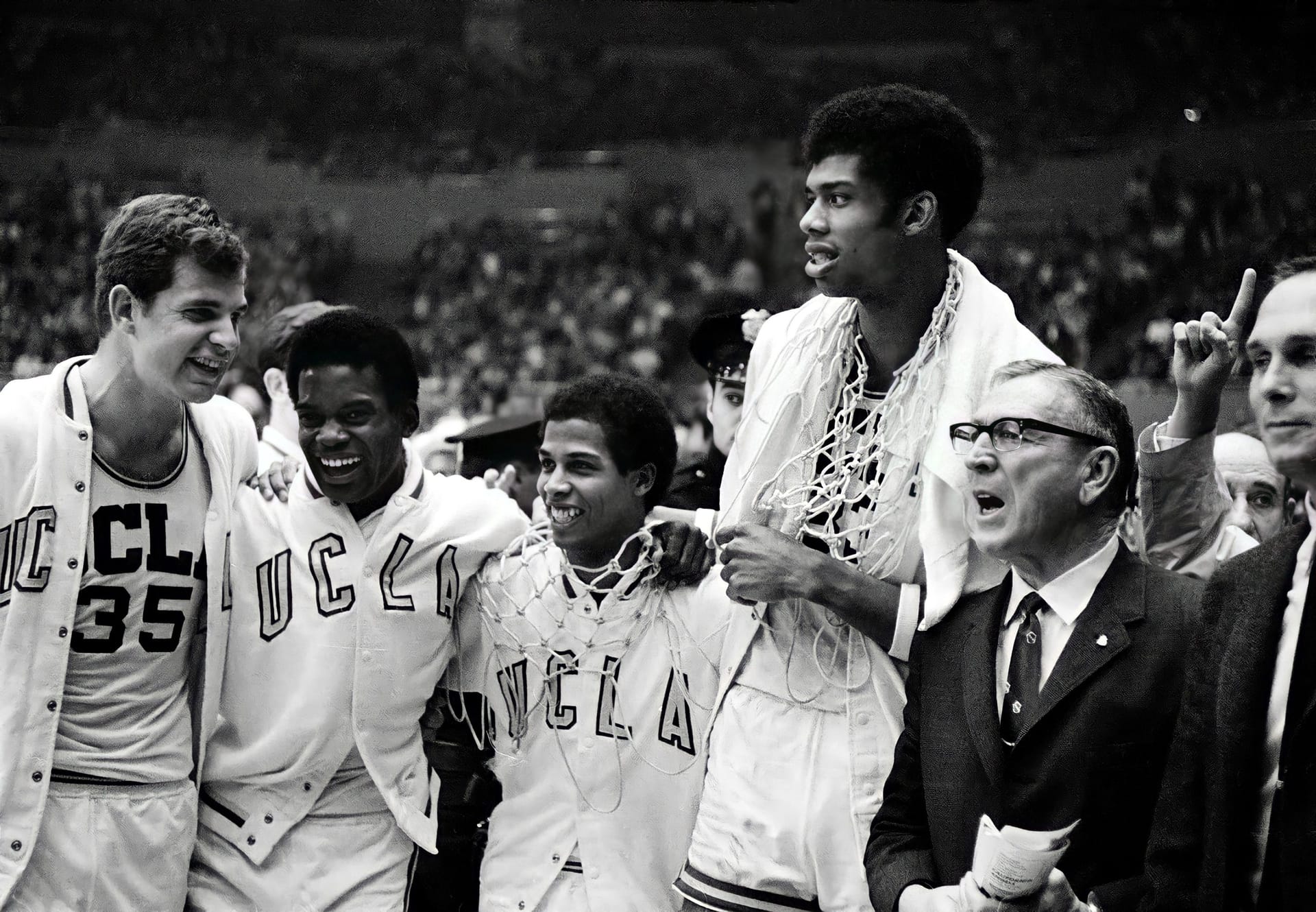
In 1987, a remarkable roundtable was held to answer a question: could the principles that produced championship dynasties in sports translate to business? They brought together John Wooden (10 NCAA championships at UCLA), Red Auerbach (9 NBA titles with the Celtics), George Allen (NFL Coach of the Year with both the Rams and Redskins), Tim Gallwey (author of The Inner Game of Tennis), and Werner Erhard (founder of est and Landmark).
You'd think they'd talk a lot about strategy, discipline, winning. But they didn't. What they kept coming back to was relationship. Not authority, not expertise. Red Auerbach, who smoked cigars on the sideline, said: "A lot of coaches scream and holler and rave and rant... The great coaches communicate." Tim Gallwey talked about how it's really a partnership: "You're both on the same side. We're gonna get the best out of you. You and I together."
And crucially, great coaches saw potential in players before the evidence was there. Erhard put it this way: "The great coaches seem to be able to sell a player on the possibility that that player is, that that player hasn't yet seen." Wooden and Auerbach built dynasties doing exactly this - betting on people others overlooked, seeing what wasn't yet visible.
They weren't just winning games. They were building people. As Erhard again summarized: "You build your people in order to win games, and you win games in a way that builds your people."
But my favorite insight came from Gallwey, who'd by then already spent a decade translating his work to business:
"It can take you years to change behavior if that's all you're looking at... What I learned was coaching perception instead of behavior, realizing behavior comes out of the way you see things."
This was the deeper cut I was missing back in 2018. The meta perspective: seeing how my personal history, my conditioning, my accumulated beliefs had created a filter. A set of views driving how I related to every challenge. Greatest hits like "I'm not good enough." "I need to be in control." "I have no choice but to..."
What I thought I wanted was for someone to give me the plays. What I discovered is that there's more power in questions. The right ones can change everything: how you lead, how you make decisions, how you relate to the pressure.
In the next post, I'll talk about what other founders discovered as well. Maybe you'll see your own story in theirs.
No spam, no sharing to third party. Only you and me.
Member discussion